03 Proof
Proof, not promises
Three of our own projects, as they were handed over.


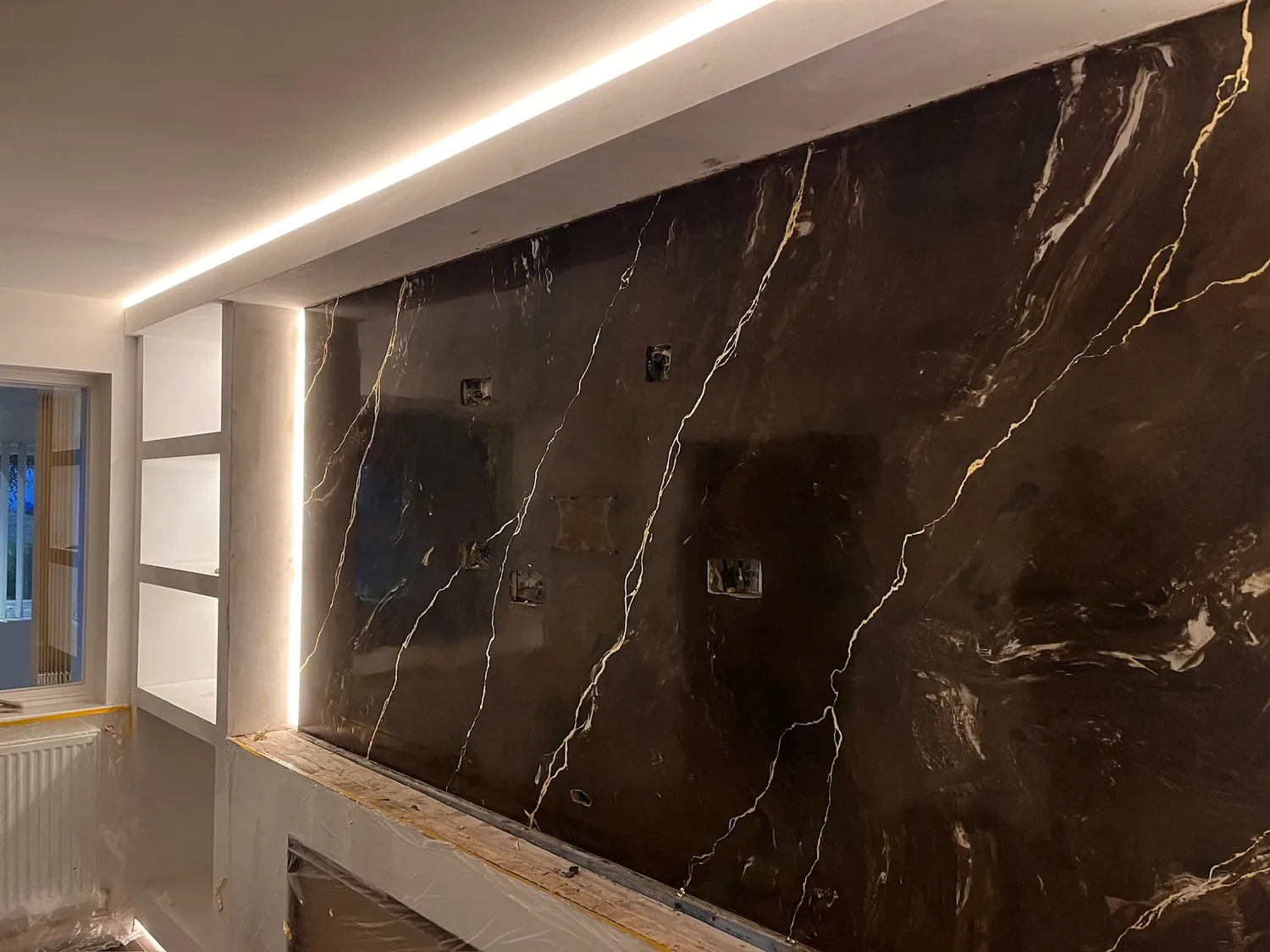


Italian lime, laid by hand and burnished by trowel. Specified by architects. Trusted on commercial and heritage projects.
We do not skim, we do not take general plastering, and we do not pass work on. Decorative lime, applied by hand, is all we do.
It comes through Zavorè, who import it. We know what is in it because we have asked, and we have never found a reason to change.
Including a Grade II* listed building, which is as high as listing goes.
Made before you commit to anything, so the decision is made with the finish in your hand.
Agreed before we start. Signed means settled.
Three of our own projects, as they were handed over.
Five stages, in writing, before we start. Nothing happens that you were not told about.
We find out what the wall is made of and what the room has to cope with, and tell you which finish will suit it before we quote.
A panel on your own wall, in the real finish and colour. It stays with you until you have decided. Nothing is agreed before that.
Preparation to protection, every part on its own line, in writing. Once signed, it is the number.
Floors and joinery covered, dust controlled, coats built up and burnished to the sample. Cleaned down at the end of every day.
Snags walked, aftercare explained, and a surface that improves with age. We stay reachable.
Lime putty and marble dust taken to a high shine with the trowel. The classic Venetian finish, and the least forgiving of a poor wall beneath it.
Grittier marble in the mix, finished flat or with a low sheen. The most forgiving of the six and the one most rooms end up in.
A thin cement-based coat with no joints. Over tiles, on floors, in showers. Modern and matt.
Lime compressed with a stone and sealed with soap, the way Morocco has done it for centuries. Seamless, water-resistant, made for showers.
A brushed lime paint rather than a trowelled plaster. Soft, cloudy and matt. The calmest finish we do.
Metal particles in a binder, applied like plaster and ageing like metal. Bronze, brass, copper, iron.
We work across Bristol, and it is one of the cities where decorative plaster is already understood and asked for by name. Georgian Clifton, with its crescents and terraces of painted stucco; Victorian Redland and Cotham; the warehouses and new apartments along the Harbourside; and an independent restaurant and bar scene around Stokes Croft, Gloucester Road and Wapping Wharf that fits out often and well.
In Clifton and Redland we work in lime, and polished plaster or Marmorino in a Georgian room there looks as if it was always meant to be. The Harbourside apartments are modern and flat, where microcement and polished plaster go on cleanly. The independents want a bar front or feature wall that gets photographed, which usually means Marmorino or liquid metal.
Everything about how we work — the samples, the fixed price, the six finishes — is on our main Venetian plastering page. This page is about Bristol.
We cover the whole of Bristol and the towns around it. If your address is not listed, ask anyway.
Send a photo of the wall and a rough size. We reply within one working day.
If you need any help, feel free to get in touch. We are happy to answer anything about finishes, timings or price.
Message on WhatsApp