03 Our work
Microcement we have finished
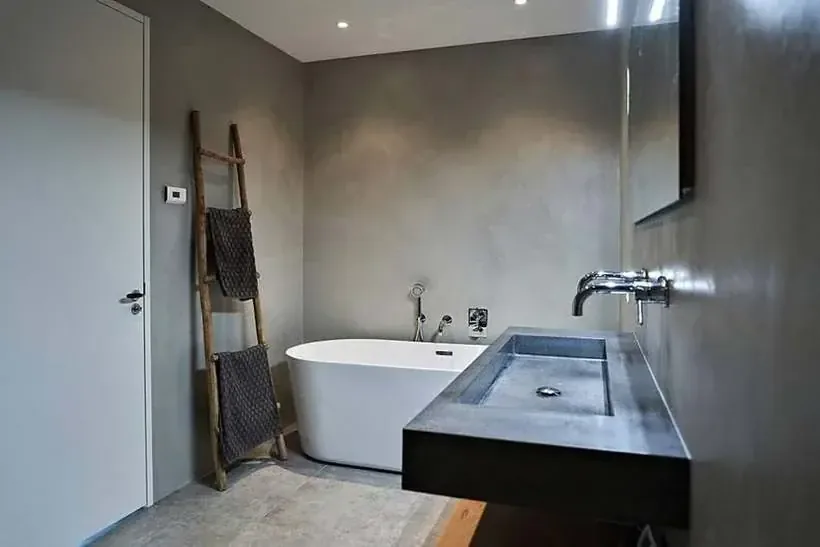
Our own projects, photographed on site. Not every photograph on this page is this finish — the gallery is grouped by project and says which is which.
A thin, hard-wearing coating that goes over almost anything — including your existing tiles — and leaves no joints anywhere.
Microcement is a cement-based coating, polymer modified, applied only a couple of millimetres thick. It is not lime and it is not part of the Venetian family, and we say so plainly because the two get sold interchangeably. What it is instead is tough, seamless and remarkably versatile: it will take a floor, a wall, a worktop or a set of stairs, and it bonds to plasterboard, concrete, screed and existing tile.
It is the right answer in new apartments, commercial interiors, bathrooms over existing tile, and anywhere a floor and a wall need to run into each other without a joint. It is the wrong answer on a damp solid wall in a period property, because it seals. That is not a fault; it is the same property that makes it good everywhere else. If your wall needs to breathe, we will steer you to lime instead.
The substrate is checked for movement and moisture, primed, and reinforced with mesh where it needs it. Two base coats, two finish coats, then sealed — the sealer choice depends on whether it is a floor, a shower or a feature wall. Tile joints need addressing first or they telegraph through.
Wondering what it costs? What a microcement bathroom costs, per square metre.
Our own projects, photographed on site. Not every photograph on this page is this finish — the gallery is grouped by project and says which is which.
Our studio is in Birmingham. These are the cities we are asked for this in most often, and each has its own page.
A photograph and a rough size is enough to begin. You will have next steps within one working day, and a sample panel made in your finish before anything is agreed.
If you need any help, feel free to get in touch. We are happy to answer anything about finishes, timings or price.
Message on WhatsApp