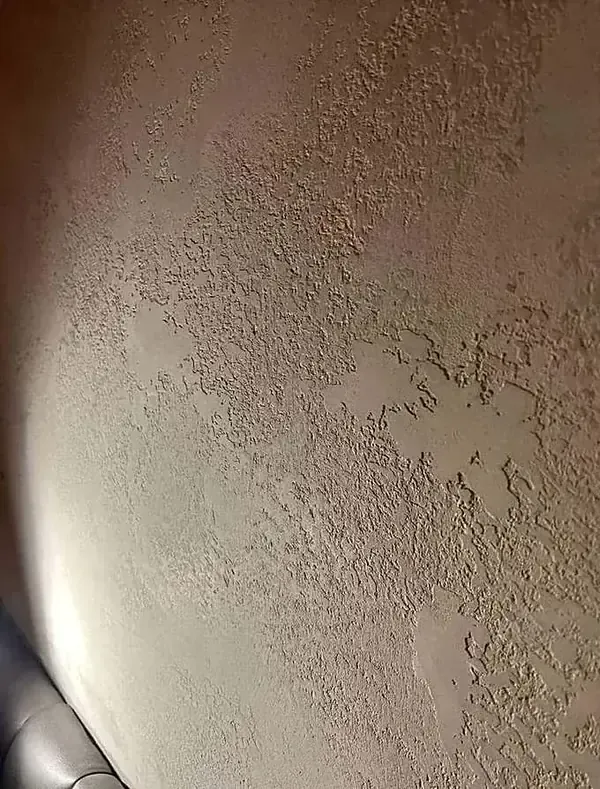
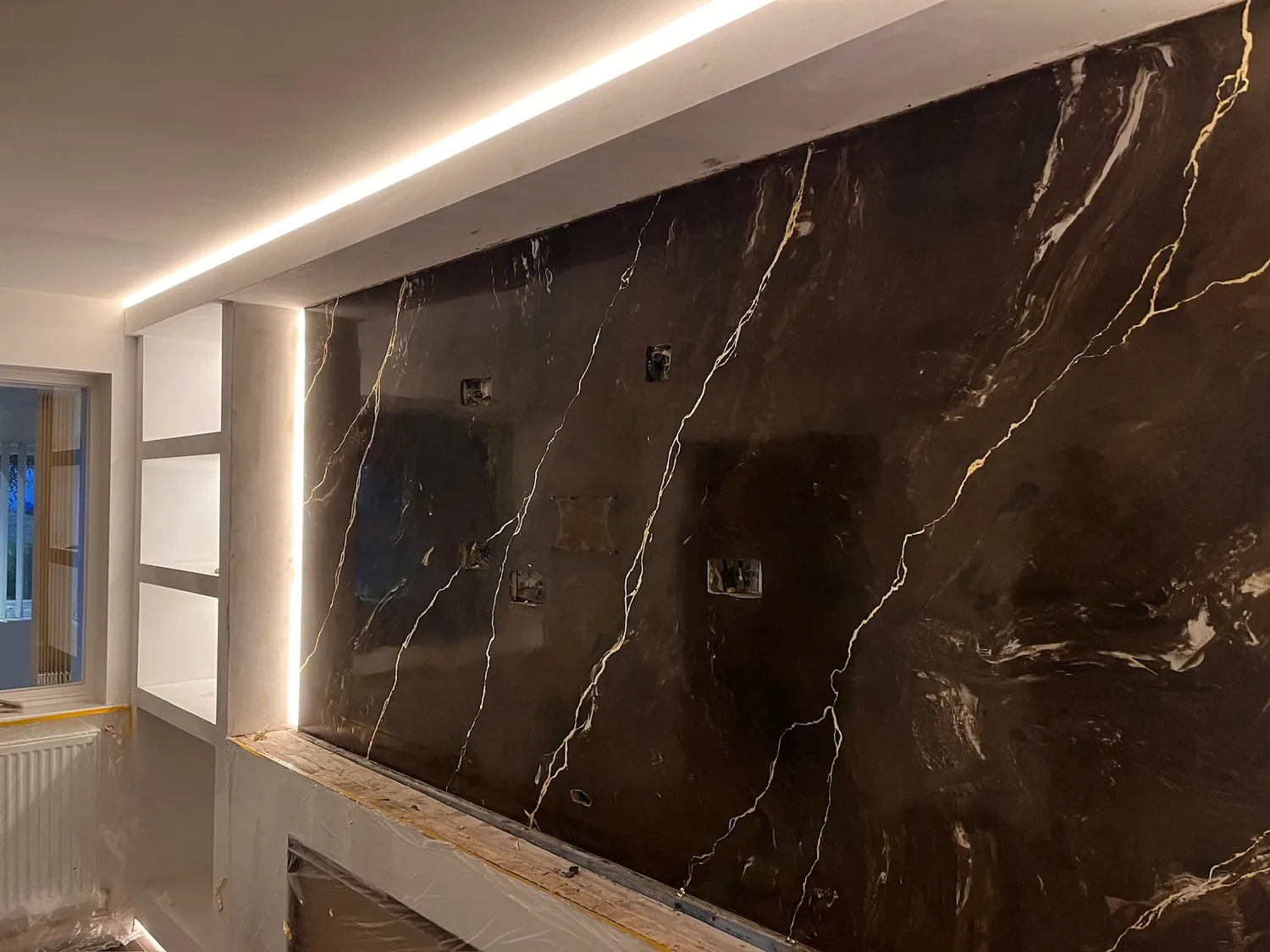
Italian lime, laid by hand and burnished by trowel. Specified by architects. Trusted on commercial and heritage projects.
We do not skim, we do not patch, and we never pass a job to someone else. Lime finishes, applied by hand, are the whole of what we do.
It comes through Zavorè, who bring it in from Italy. We know what goes on your wall because we know where it came from.
Architects write us into their drawings. Our work includes a Grade II* listed building, the highest listing there is.
Three of them, in your colour and finish, made for your wall. You decide with the finish in your hand.
Written down, itemised, agreed. After it is signed, it does not change.
No mystery, no drift. Most projects run to this shape, and you know the next step before you take the current one.
A call or a site visit. We look at the substrate and how the room is used, then tell you which system actually suits it.
A panel in your exact finish, colour and sheen, made for your wall and left with you to live with. Nothing proceeds until you have signed it off.
Itemised in writing: preparation, materials, labour, protection. Nothing hidden in the rate. The number does not move once agreed.
Floors and joinery protected, dust controlled, coats built and burnished to the sampled standard. Clean site every evening.
Snag walk, aftercare guidance, and a surface that keeps improving with age. We stay reachable afterwards.
Aged lime and marble flour, worked until it reflects. The glassiest of the six, and the one people mean by Venetian plaster.
Marble aggregate with a bit more grain, matt or softly burnished. Kinder across a big wall, and it wears in rather than out.
Two millimetres thick, seamless and sealed. Goes over tiles, takes a floor, and does not mind a shower.
The Moroccan one: lime, a polishing stone and olive-oil soap. One continuous surface, which is why it lives in wet rooms.
Brushed, not trowelled. Chalky, cloudy and almost without sheen. Four walls of it make a room feel quiet.
Actual metal in the finish, which tarnishes and patinates like metal does. Bronze, brass, copper and iron.
We work across Derby and the villages north of it. The city has a genuinely good Georgian quarter around Friar Gate, the converted mills at Darley Abbey, and larger family houses out through Allestree, Duffield and Littleover. Towards the Peak District we do the barn and farmhouse conversions where a lime finish is the only one that makes sense.
In Friar Gate and the Duffield houses we work in lime. The Darley Abbey mills are modern inside and take polished plaster and microcement cleanly. In the barn conversions, limewash and Marmorino on walls that are not quite straight look right in a way that nothing flat and modern does.
Everything about how we work — the samples, the fixed price, the six finishes — is on our main Venetian plastering page. This page is about Derby.
We cover the whole of Derby and the towns around it. If your address is not listed, ask anyway.
A photograph and a rough size is enough to begin. You will have next steps within one working day.
If you need any help, feel free to get in touch. We are happy to answer anything about finishes, timings or price.
Message on WhatsApp