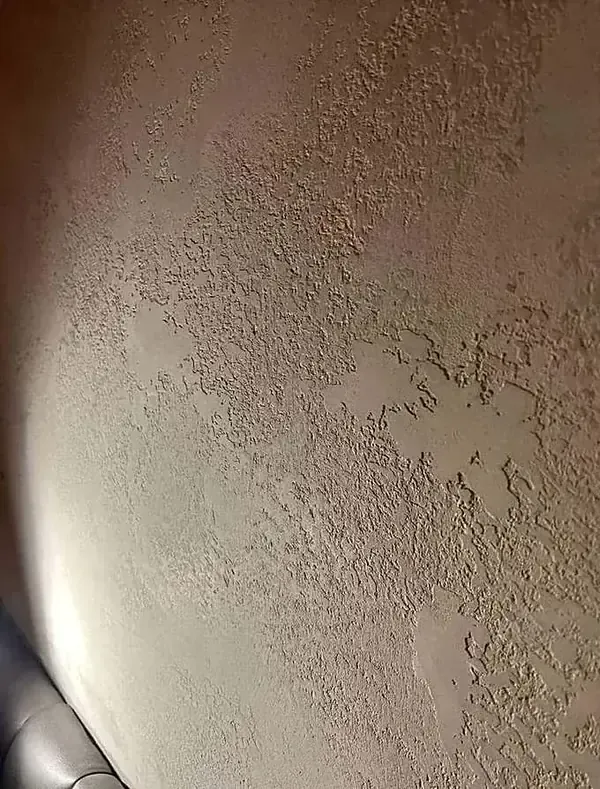
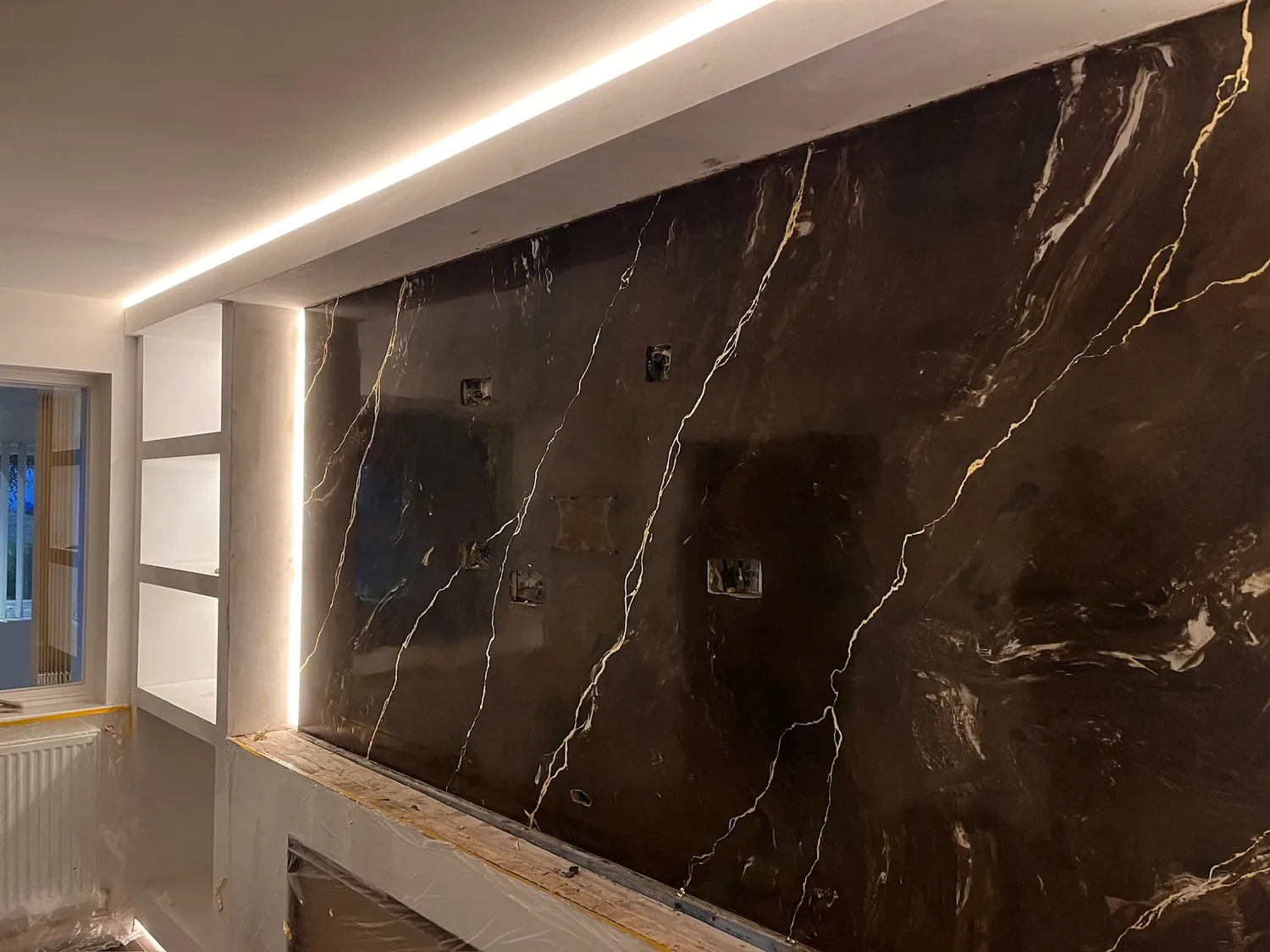
Italian lime by hand, burnished by trowel, nothing sprayed. Architect-specified. Trusted on commercial and heritage work.
No general plastering, no skim coats, no subcontractors. The people on your wall do this every working day and nothing else.
Supplied by Zavorè, who import it. We have used it for years and we know exactly how it behaves.
Our work is specified on drawings, and includes a Grade II* listed building, which is as high as a listing goes.
Your finish, your colour, your wall. You choose from boards you can hold, before you commit.
Every line agreed before we start. The total does not move once it is signed.
Five stages, in writing, before we start. Nothing happens that you were not told about.
We find out what the wall is made of and what the room has to cope with, and tell you which finish will suit it before we quote.
A panel on your own wall, in the real finish and colour. It stays with you until you have decided. Nothing is agreed before that.
Preparation to protection, every part on its own line, in writing. Once signed, it is the number.
Floors and joinery covered, dust controlled, coats built up and burnished to the sample. Cleaned down at the end of every day.
Snags walked, aftercare explained, and a surface that improves with age. We stay reachable.
Aged lime and marble flour, worked until it reflects. The glassiest of the six, and the one people mean by Venetian plaster.
Marble aggregate with a bit more grain, matt or softly burnished. Kinder across a big wall, and it wears in rather than out.
Two millimetres thick, seamless and sealed. Goes over tiles, takes a floor, and does not mind a shower.
The Moroccan one: lime, a polishing stone and olive-oil soap. One continuous surface, which is why it lives in wet rooms.
Brushed, not trowelled. Chalky, cloudy and almost without sheen. Four walls of it make a room feel quiet.
Actual metal in the finish, which tarnishes and patinates like metal does. Bronze, brass, copper and iron.
We work across Solihull every week, from the 1930s semis around Olton and Shirley to the larger plots out at Knowle, Dorridge and Hampton-in-Arden. A great deal of what we do here is the rear extension that has turned three rooms into one, with a long uninterrupted run of wall behind the kitchen and the sofa. That wall is exactly what polished plaster was made for.
The newer houses are plasterboard and gypsum, which takes a decorative finish without fuss. The 1930s stock is often lime beneath later skims, so we check before anything goes on. Solihull bathrooms tend to be large, which is where our microcement and Tadelakt work earns its keep: one seamless surface instead of a wall of grout lines.
Everything about how we work — the samples, the fixed price, the six finishes — is on our main Venetian plastering page. This page is about Solihull.
We cover the whole of Solihull and the towns around it. If your address is not listed, ask anyway.
A photograph and a rough size is enough to begin. You will have next steps within one working day.
If you need any help, feel free to get in touch. We are happy to answer anything about finishes, timings or price.
Message on WhatsApp